
The medieval period is often associated with knights, castles, and epic battles. Yet, amid the sword fights and political intrigue, another important aspect of medieval life existed: tournaments and games. These were not just pastimes or forms of entertainment; they were also vital to the culture and social structures of the time. In this blog, we’ll explore the tournaments and games that captivated the medieval world, from the joust to the more informal games that allowed commoners and nobility alike to display skill, strength, and honor.
The Rise of the Tournament
Tournaments in the medieval period served as both martial training and public spectacle. These events became especially popular during the 12th and 13th centuries, evolving from the early traditions of knightly combat into elaborate competitions that often included a range of games and sports.
One of the most iconic elements of the medieval tournament was jousting, where knights would charge at each other on horseback with lances aimed at unseating their opponent. The spectacle was not only a demonstration of skill and bravery but also an opportunity for knights to earn fame and prizes, including money, land, or the favor of noblewomen. While jousting is the most famous event, the tournament was often a series of events that included different types of combat and games.
The Joust
The joust involved knights charging at one another at full speed, each armed with a lance. The goal was to unseat the opponent from their horse by striking them with the lance or knocking them off balance. Protective armor and shields made jousting a dangerous but thrilling sport. It was a test of both the knight’s horsemanship and their skill with a lance. The jousting tournaments were sometimes called “lists”, referring to the area where the combatants would face off, usually marked by a fence or barriers.
Melee Combat
In addition to jousting, the melee was a group combat event that saw knights engage in full-scale battles with swords, axes, and maces. Often involving multiple participants from different noble families or factions, the melee was less formal and could be chaotic, with no strict rules about who could fight whom. Melees were a display of strength, endurance, and the ability to work in teams, though they could be brutal and bloody affairs.
The Tournaments as a Social Event
Medieval tournaments were not just about combat. They also featured a festive atmosphere, with feasts, dances, and the display of heraldic symbols. Tournaments often attracted large crowds, including commoners, who came to watch the spectacle and cheer for their favorite knights. Nobility used these events to gain favor, increase their reputation, and secure advantageous marriages. Some tournaments were even used as a way to settle political disputes, with knights fighting on behalf of their lords or kingdoms.
Other Medieval Games and Pastimes
While knights engaged in the dangerous sport of jousting and melee combat, common people and the nobility enjoyed a wide variety of other games and pastimes. These activities ranged from board games to physical competitions, and each had its own rules and customs.
Chess
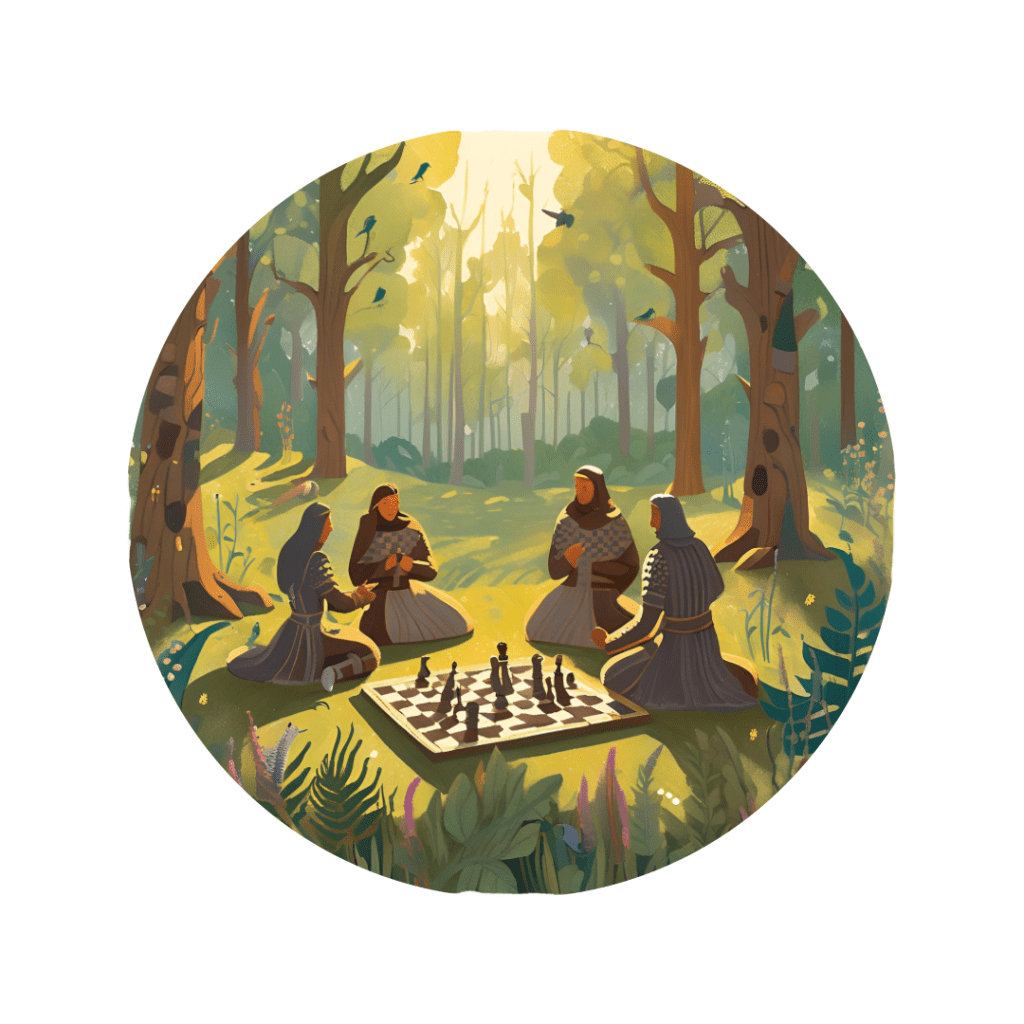
Chess was one of the most popular games in medieval Europe, particularly among the nobility. The game, which originated in India and Persia, was adapted by European nobles in the Middle Ages. It became a pastime for kings and knights, offering a strategy-based challenge that mirrored the intellectual demands of warfare and governance. The pieces were often styled to reflect medieval society, with the king, queen, knights, and castles.
Archery
Archery was another popular medieval game, especially in England, where it was considered an essential skill for both military and sport purposes. Longbow tournaments were held to test accuracy and skill, with competitors attempting to hit targets from increasingly difficult distances. The skill of archery was so important in medieval warfare that archery practice was often required by law, and skilled archers were highly valued in battle.
Bowls and Lawn Games
Medieval lawn games were a precursor to modern-day sports like croquet or bowling. Nobles often played these games in the courtyards or gardens of their estates. The rules varied widely, but the common theme was skill and precision, whether rolling a ball towards a target or attempting to knock opponents’ pieces from the playing area.
Falconry
Though not a game in the traditional sense, falconry was a popular pastime among the nobility. Falcons were trained to hunt birds and small game, with the success of the hunt acting as a display of the falconer’s skill and the bird’s training. The birds were considered prized possessions, and falconry served as both sport and a status symbol for noble families.
Tossing the Caber and Other Strength Games
In the rural parts of medieval society, particularly in Scotland, strength-based games like caber tossing (which later became part of the Highland Games) were common. The challenge of tossing a large wooden log end over end required great strength and precision, much like the feats of strength exhibited in modern-day competitive strongman events.
The Legacy of Medieval Tournaments and Games
Medieval tournaments and games were more than just ways to pass the time—they were integral to medieval society. Tournaments provided an arena for knights to showcase their martial prowess, gain favor with lords and ladies, and settle disputes. For the nobility, these events were also a means of reinforcing their social status and power. Meanwhile, games like chess and archery offered intellectual and physical challenges that tested a person’s wit and skill.
In the centuries since, many of these medieval tournaments and games have evolved into the modern sports and activities we recognize today. Jousting, once a common competition, still exists as a ceremonial event at some Renaissance fairs, while chess has become one of the most widely played and studied games in the world.
The medieval era, despite its violence and political instability, also gave rise to a rich tradition of games and tournaments that provided entertainment, fostered social bonds, and shaped the cultural fabric of Europe. These activities remind us that even in times of war, people sought out moments of joy, competition, and camaraderie—an enduring testament to the resilience and creativity of medieval society.
 Gathering of the North
Leave a comment